|
Read time: 12 min
|
Posted on:
After 33 years in medicine, Dr. Sha-Barbara McDaniel can usually tell what’s wrong within the first 30 seconds of a visit. She lets the patient keep talking anyway.
That instinct, to slow down and hear the whole story even when the diagnosis already seems obvious, is something she’s carried from a 21-year private practice in women’s health into the way she practices telehealth today.
Over three decades, she built her career on obstetrics and gynecology, then added board certification in obesity medicine and certification in addiction medicine, and now she treats across all of it: women’s health, metabolic health, addiction, urgent care, and primary care.
She’ll be the first to tell you she knows the “bread and butter” cases by heart. But she also knows that the patient in front of her has never lived this particular problem before, and that being heard is part of being treated.
In this interview, Dr. McDaniel shares the science project that set her path at age 10, why she traded a long career in the operating room for virtual care, what she’s learned about listening, and the personal health turnaround that reshaped how she thinks about hormones, weight, and food.
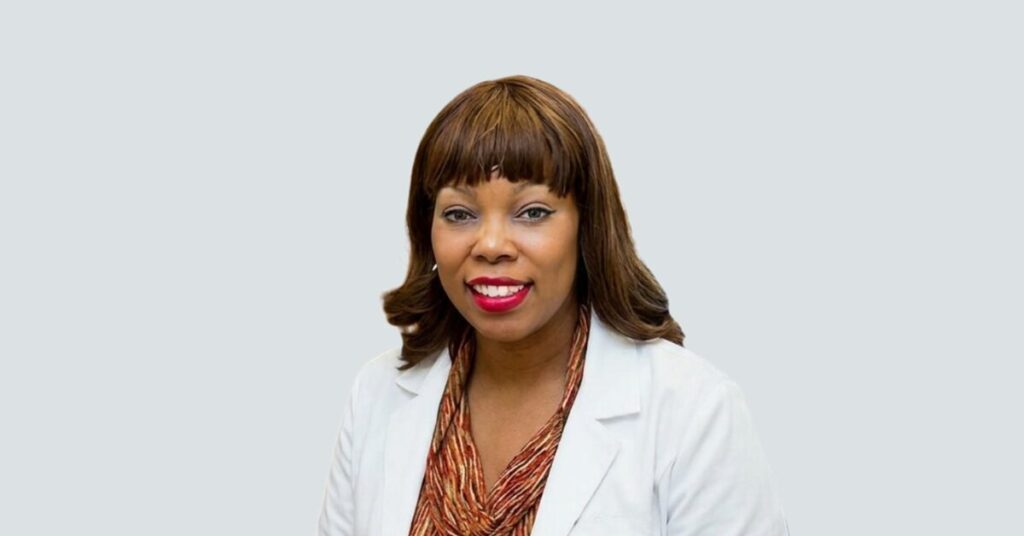
Dr. Sha-Barbara McDaniel is a board-certified obstetrician-gynecologist with 33 years of experience, the foundation of a career built primarily on women’s health. More recently she earned board certification in obesity medicine and certification in addiction medicine, broadening her practice well beyond GYN.
For about 21 years, she ran her own private practice before transitioning, over the past year, into full-time telehealth. Today, she sees adult patients of all kinds, men and women, and treats everything from acute and urgent concerns to complex hormonal, metabolic, and women’s health issues, all virtually.
Dr. McDaniel at a Glance:
Her approach reflects a simple belief: most of good medicine happens in the conversation, long before anyone reaches for a test.
We spoke with Dr. McDaniel about her path into medicine, how she practices, and what she wants patients to understand about getting real care online. Below, she shares her perspective in her own words.
I’m Dr. McDaniel, and I’ve been practicing for 33 years now. I’m board-certified in obstetrics and gynecology, and a couple of years ago, I also earned a board certification in obesity medicine. On top of that, I’m certified in addiction medicine.
For the last nine months or so, I’ve been practicing telehealth rather than in person: women’s health, obesity medicine, addiction medicine, and quite a bit of urgent care and primary care. So I’m covering a lot of ground. But my base, my professional life, is predominantly built on women’s health.
Everyone I see is an adult; I don’t practice pediatrics. I work with men about as often as women. With men, it’s predominantly obesity medicine and a good amount of addiction medicine. With women, it’s been everything: the largest share is urgent care, then obesity medicine, then women’s health.
On the women’s health side, a lot of it is hormonal: menstrual pain, irregular cycles, heavy flow. Then there’s the bread-and-butter gynecology, infections and yeast, fungal, and bacterial pH imbalances, and then bladder infections and pelvic pain.
More than people expect. Predominantly, everything in gynecology can be managed on a telehealth basis at least 50 to 75 percent of the way, and roughly 40 percent of cases can be managed 100 percent virtually.
A lot of women, and men too, will tell you that when you go in to see a doctor, unless it’s a routine exam, most of the visit is the history. It’s the questions and the details, then deciding what test is needed, and only the last part is the exam. So having the conversation is almost always the first real step.
When I do send someone in, it’s about 30 percent of the time, and it’s for the things you simply can’t do remotely: a biopsy, a culture or swab, an ultrasound for chronic or new pelvic pain. It’s not Star Trek yet, so we can’t do a biopsy virtually. But the evaluation and a lot of the management can start online, and often that’s all it takes.
I wanted to be a doctor since I was a child, since I was about 10 years old, actually, doing a science project. And the project I picked was surgical intervention on fetuses, operating before birth on babies with conditions like hydrocephalus, water on the brain, or an obvious tumor. This was the late ’70s, early ’80s, and there was all this science about maternal-fetal medicine doctors performing those surgeries. I thought it was fascinating, and I wanted to do it.
So from age 10 I wanted to be an obstetrician-gynecologist. At first I thought I’d go into maternal-fetal medicine, but it turned out those surgeries are performed very rarely. Once I got into medical school and went through the rotations, I realized I really enjoyed the surgery and the obstetrics, so I stuck with general OB-GYN. I started medical school at 20 and finished a little under 24. It turned out to be a really good choice.
Part of what drew me in was that I wanted a career that would never be boring, something always interesting, where you’re always learning. Medicine is always changing. And it’s true, it’s never boring, mostly because you’re dealing with people, and people are all different.
Even when they have the same issue, you get different personalities and different ways of responding.
That’s why, even though I usually know within about 30 seconds what the problem is and what the treatment will be, I still let people tell their whole story. Everyone wants to be heard. They want to give their own take on what’s going on, and what they’re telling you feels unique to them, because it is.
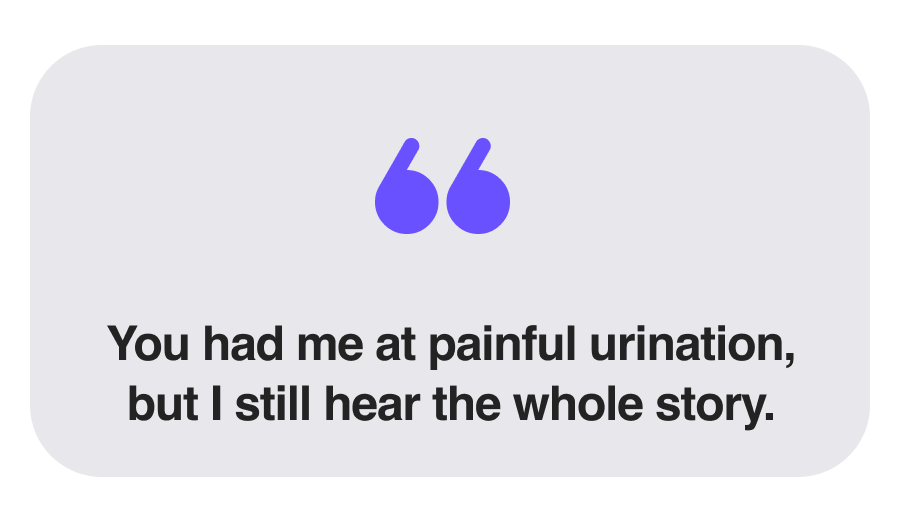
As I sometimes tell patients: you had me at painful urination, but I still hear the whole story. So always let people tell their story, and then offer your insight based on experience and the science.
It’s a little like being Sherlock Holmes. Every blue moon, someone throws in one last clue at the very end, something they didn’t mention at the beginning, and that changes the whole picture.
A simple example: when someone says they have burning with urination, I’ve learned to ask whether the burning is inside, as the urine comes out, or on the skin afterward. Those are two completely different problems with two completely different treatments. That kind of detail only comes out when you let the conversation breathe.
It’s a slightly winding story. I had my own private practice for 21 years in New York City after training at NYU. As a fallout from the pandemic, the numbers just never came back the way they were, and as my lease was ending, I couldn’t commit to another long-term one.
I transitioned my patients into a faculty practice, then tried working for a corporation for the first time in my career, and I quickly realized I didn’t like it. I’d always had complete freedom, over my schedule, over how I practiced, and that structure wasn’t for me.
I moved to a community hospital closer to home, which gave me medical freedom but very little control over my own time.
That’s when I knew I needed telehealth, because it gave me back the flexibility I’d always had. This is my second platform, and what I really appreciate here is the freedom: I work when I want to work.
If something comes up, I can change it. Some platforms make you schedule months in advance or pile on rules and protocols that feel very confining. Here, the standard is just the standard of care, what the national societies recommend, with the flexibility to also have a real life. If I have to run an errand or pick up my youngest, I can.
A solid, broad knowledge base, and a lot of honesty about its edges. I don’t practice anything I’m not comfortable with. I have the experience and the expertise, so when a patient comes on nervous, wondering whether the doctor will be kind or whether they’ll be heard, I can usually put them at ease. I’ve had so many patients end a visit saying, “Wow, that was easier than I thought.”
But I’m not God. I can’t know every single thing you bring to me. If someone mentions an herb or a supplement I’m not familiar with, I’ll just say so and look it up with them, right there on the call, to check for interactions. People appreciate that transparency.
I also never give people a hard time over a work note or a sick day. A pharmacist friend said something to me years ago that stuck: a doctor can’t tell you how you feel.
If a patient says they have a headache, or they’re dizzy, or they just don’t feel well enough to work, I’m not going to challenge that, because I genuinely can’t feel what they feel. I give people the benefit of the doubt, and I try to be warm, because a lot of patients are anxious just talking to a stranger who has some power over whether they get help.
To help to the very best of my ability, and to be as empathetic as possible, no matter the situation.
That came home to me especially in the addiction medicine work I did over the past year. So many of those patients thanked me just for being kind, because there’s so much stigma, and they’d encountered so many judgmental doctors and pharmacists.
It’s genuinely sad that someone has to express gratitude for being treated the way everyone should be treated. To me that’s not extra; it’s just the baseline of how you care for a person.
A few things. I speak French fluently and I love to travel; I’ve been to a lot of different countries. But honestly, the thing that shocks people most is that I have four children, four kids in five years. When patients used to come in year after year, they’d say, “Oh my God, again?” I’d just laugh, because to me four isn’t that many; I come from big families on both sides.
The other thing that surprises people is my own health story. Across those pregnancies I gained a lot of weight, well over a hundred pounds, and by around 2013 I just felt unhealthy. I didn’t even fully register how much I’d gained; people really don’t see themselves the way they are.
So I started doing research, and a lot of what I found genuinely shocked me, because some of the health advice we’d all been given simply wasn’t supported by the data.
I changed how I ate, leaned into whole, anti-inflammatory foods and fermented foods, and over time I lost more than a hundred pounds. That experience is a big part of why I went on to get board-certified in obesity medicine. It made the science personal.
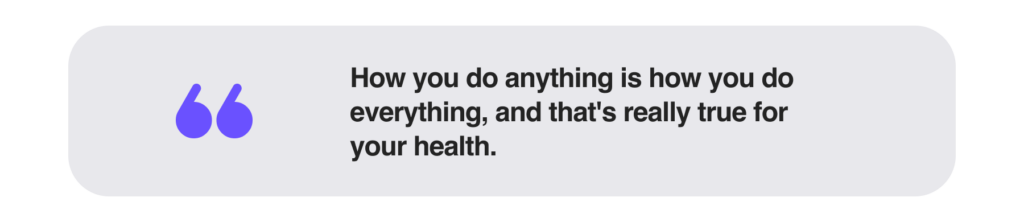
Pay attention to what you actually eat. How you do anything is how you do everything, and that’s really true for your health.
So much of modern illness, diabetes, high blood pressure, obesity, even a lot of skin issues, is inflammatory, and a lot of what people eat is inflammatory. The single biggest shift I encourage is moving away from ultra-processed, packaged “fast” foods, the frozen meals and jarred sauces, toward real, whole foods you actually prepare.
I had a patient in her 60s tell me she realized, partway through, that she’d never really cooked; she’d only ever warmed things up. Once people start cooking simple, real meals and adding fermented foods like yogurt or sourdough, a lot of things improve, mood, digestion, energy, weight, because so much of that is tied to hormones and the gut.
One concept I try to explain is that constant snacking keeps insulin elevated all day, and insulin is the hormone that tells your body to store fat. Most whole fats don’t spike blood sugar, so foods like avocado don’t drive that cycle the way grazing on processed snacks does.
None of this has to be complicated or expensive. A genuinely healthy meal can take ten minutes of thought and a little practice. Of course, any meaningful change to your diet, fasting, or how you eat is worth discussing with your own physician first, since the right approach really does depend on the person.
For Dr. McDaniel, three decades of experience haven’t made medicine more mechanical, they’ve made it more human. She can read a case quickly, but she’s learned that the fastest path to good care still runs through the patient’s own story.
Whether she’s managing a straightforward infection, walking someone through their hormones, or sitting with a patient who’s used to being judged, her goal is the same: bring the full weight of her experience to the visit, give people the benefit of the doubt, and make every interaction as warm and useful as it can be.
Dr. McDaniel is currently seeing patients through virtual visits on DrHouse, continuing the work she’s done throughout her career while making thorough, attentive care available wherever her patients are.
Content on the DrHouse website is written by our medical content team and reviewed by qualified MDs, PhDs, NPs, and PharmDs. We follow strict content creation guidelines to ensure accurate medical information. However, this content is for informational purposes only and not a substitute for professional medical advice, diagnosis, or treatment. For more information read our medical disclaimer.
Always consult with your physician or other qualified health providers about medical concerns. Never disregard professional medical advice or delay seeking it based on what you read on this website.
If you are experiencing high fever (>103F/39.4C), shortness of breath, difficulty breathing, chest pain, heart palpitations, abnormal bruising, abnormal bleeding, extreme fatigue, dizziness, new weakness or paralysis, difficulty with speech, confusion, extreme pain in any body part, or inability to remain hydrated or keep down fluids or feel you may have any other life-threatening condition, please go to the emergency department or call 911 immediately.
Experience 24/7 complete care in one visit, including treatment, prescriptions, and delivery.



on your schedule
Skip the unnecessary waiting room,
see a board-certified clinician now.
Prescriptions as needed
Renew or get a new Rx.
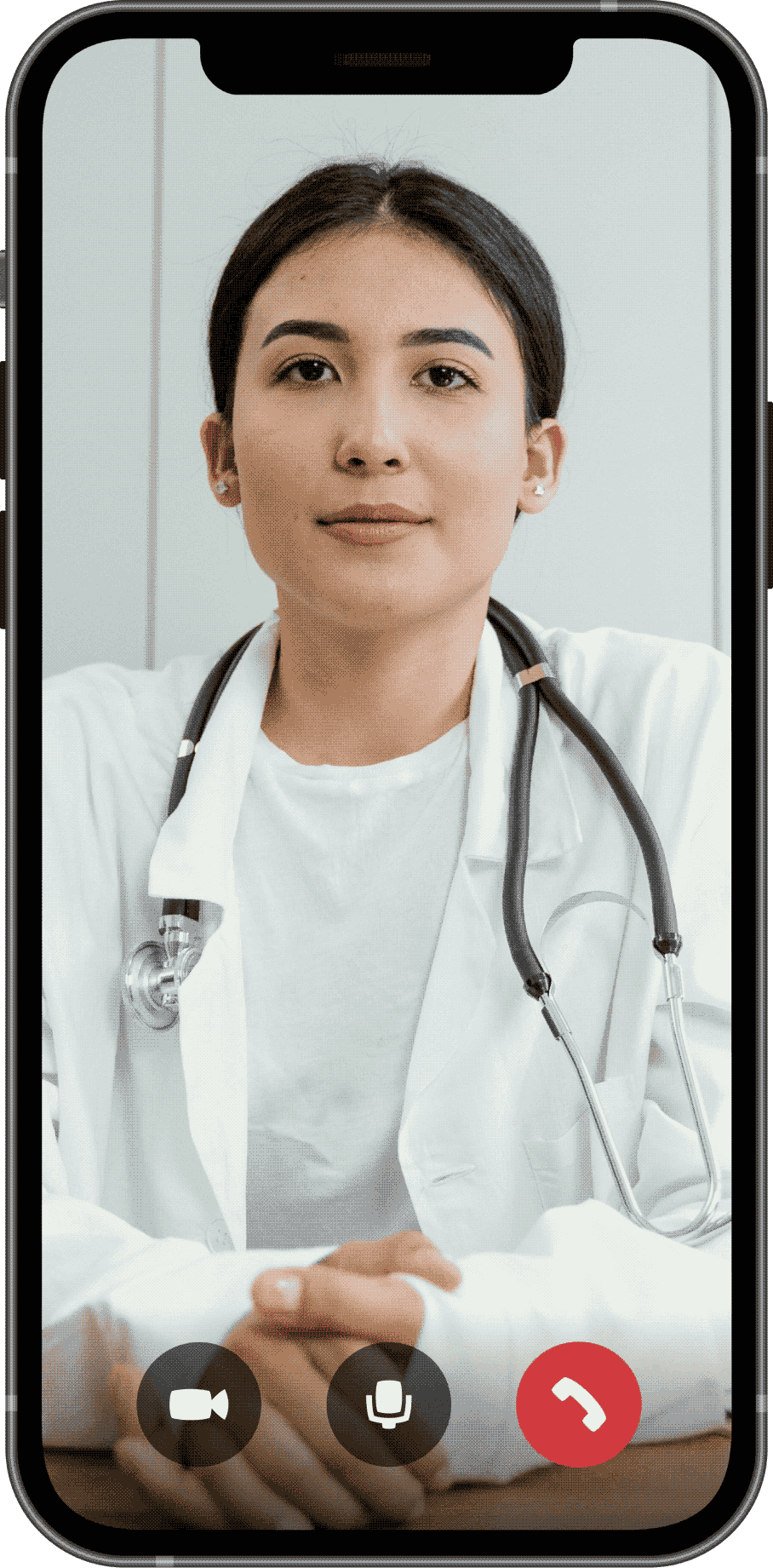
On-demand virtual visits
See a physician 24/7.
24/7 care support
We are here to help you.

Download the DrHouse app.
Set up your free account in a minute.
Start a visit with an online doctor. Wait time is less than 15 minutes.
Get an Rx from your preferred pharmacy. Pick up a Rx nearby or get it delivered to you.
on your schedule
Skip the unnecessary waiting room, see a board-certified physician now.
Available in 50 states. Insurance accepted.