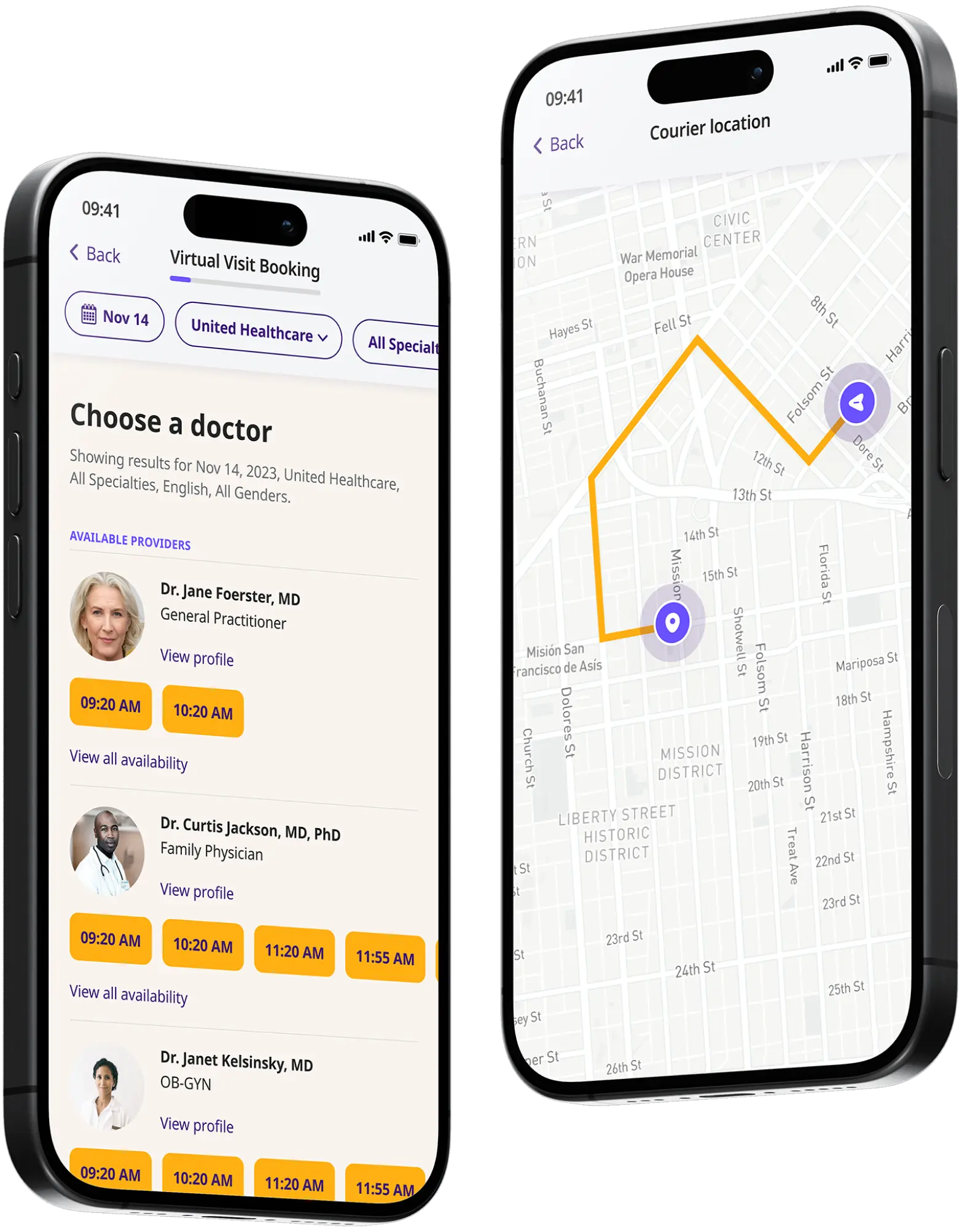
Telemedicine Appointments 24/7
Telemedicine services from your phone, day or night. Your doctor can diagnose, treat and prescribe when medically appropriate, all by secure video.
-
 Board-certified U.S. MDs and DOs, available 24/7 in all 50 states
-
Insurance accepted, typical copay $0 to $30, or $129 self-pay
-
Pharmacy pickup near you, or same-day delivery in as little as 1 hour*


Available in 50 states. Insurance accepted.
Accepted Insurances


*Having a visit does not guarantee a medication will be ordered or refilled. It is the physician's professional decision following a clinical evaluation. If your clinician prescribes an eligible medication, you may be able to choose delivery from a licensed partner pharmacy. You may also skip delivery and send your prescription to any pharmacy for pickup. Your care is not affected by this choice. Prescription delivery is available in select cities. Delivery times may vary based on local pharmacy hours. Pharmacy delivery orders processed through the DrHouse Platform are not available to Users who are enrolled in, covered by, or are beneficiaries of any federal or state government health care program, including Medicare, Medicaid, CHIP, TRICARE, or CHAMPVA.


24/7 Personal Care
Consult with a physician in 15 minutes, refill an Rx or chat with our care assistants.

Affordable & Convenient
See your cost upfront and get treatment for hundreds of different conditions.

Insurance Accepted
We accept most major insurance plans, making healthcare easy and affordable.
See If Delivery Is Available Near You
Delivery Not Available
Enter your ZIP code to check if prescription delivery is available in your area and how soon your meds could arrive.


How to get started
Choose your doctor, start a virtual visit, and have your prescriptions sent to your preferred pharmacy for pickup — all in just a few easy steps.
Choose a doctor
Choose a physician by availability, specialty, ratings, and more.

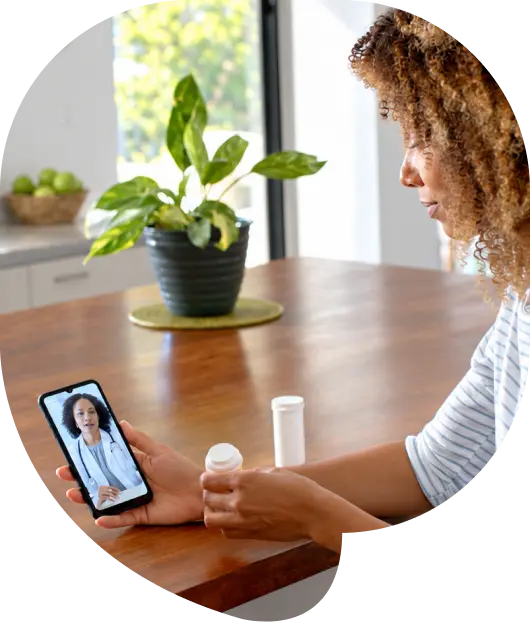
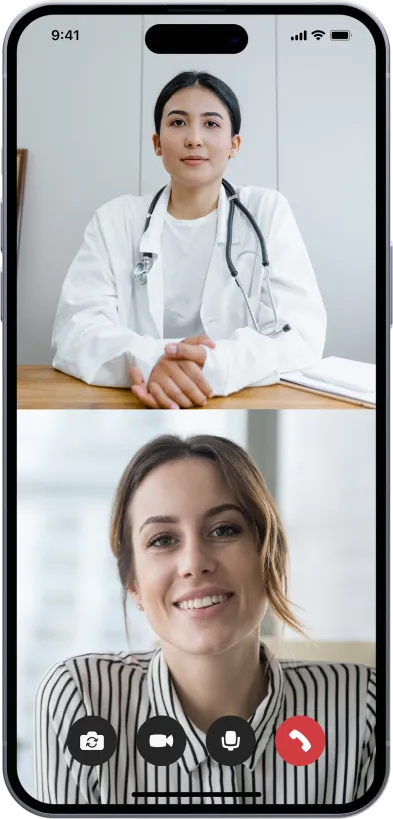
Start your video visit
Connect with a doctor in minutes on a secure video call.
Get your prescription
Pick up your meds or have them delivered in as little as an hour.

Available in 50 states. Insurance accepted.

One-Time
Physician Visit
One-time visit with a physician for diagnosis, treatment, Rx, labs, referrals, and doctor’s notes.


Accepted Insurances
See why people turn to DrHouse...

Best online doctor
Amazing
Will use again
Quick, convenient...
Great.
I loved it
Very easy
Wonderful app...
Very satisfied
Surprisingly Fast
Great doctor!
1st time
Five stars
Highly Recommend
AMAZING!!
First time user
Definitely using...
Best Virtual Doctor
Very useful
Got my prescript...
Not bad at all
Reliable...
Best healthcare app


As seen in





About telemedicine
What is telemedicine?
Telemedicine is the use of video, phone and other technology to give medical care when the patient and the clinician aren’t in the same place. The Institute of Medicine defined it as “the use of electronic information and communications technologies to provide and support health care when distance separates the participants.” The U.S. Department of Health and Human Services (HHS) puts it more simply: telehealth, sometimes called telemedicine, “lets you see your health care provider without going to their office.”
People also shorten it to telemed, and you’ll see the same thing called virtual care, a virtual visit or an online doctor visit.
What is a telemedicine appointment?
A telemedicine appointment, also called a telehealth or telemed appointment, is a visit with a clinician by video or phone instead of in an exam room. It runs like an office visit. You describe your symptoms, the clinician asks questions and reviews your history, and you leave with a diagnosis and a plan.
How does telemedicine work?
Telemedicine works like an office visit held over a secure connection. You request a visit, share your symptoms and health history, and meet the clinician on screen. From what you describe and what they can see, the clinician can diagnose many common problems, prescribe medication when it’s appropriate, and refer you for tests or in-person care when they need more.
Is telemedicine a phone call?
It can be. HHS lists phone calls, video visits, secure messages and tools that share readings like your blood pressure with your provider as ways to get telehealth. A live video visit lets the clinician see you, a phone visit is audio only, and secure messaging lets you trade messages, photos or files with your care team when it suits you both. Remote patient monitoring uses home devices, such as a blood pressure cuff, that send readings to your care team.
Telehealth vs. telemedicine: what’s the difference?
In everyday use, there isn’t one: HHS treats telemedicine as another name for telehealth. When people do draw a line, telehealth is the broader term and can include patient education, remote monitoring and training for clinicians. Telemedicine, in that stricter sense, means a clinician diagnosing and treating a patient remotely.
What can telemedicine treat?
HHS lists many kinds of care that work well by telehealth. They include checking on common problems like headaches or infections, looking at skin problems, managing your medicines, and care for common sicknesses like colds or an upset stomach. Telehealth also covers reviewing lab or X-ray results, check-ins after surgery, talk therapy, and physical or occupational therapy.
What can’t telemedicine do?
Telemedicine can’t do everything an exam room can. A clinician can’t listen to your lungs or press on your belly by video, so some problems need an in-person visit. Blood work, X-rays, scans, stitches and other procedures happen elsewhere, though a telemedicine clinician can refer you for them. And telemedicine isn’t for emergencies.
Is telemedicine still allowed?
Yes. Telemedicine is part of everyday care in the U.S., and the question usually comes from Medicare’s pandemic-era rules. HHS reports that recent legislation extended many Medicare telehealth flexibilities through December 31, 2027, including medical telehealth visits from home. HHS also reports that behavioral and mental health telehealth from home is now permanent.
How many people use telemedicine?
About 3 in 10 U.S. adults used telemedicine in 2022: 30.1%, down from 37.0% in 2021, according to the National Center for Health Statistics (NCHS). Among adults 65 and older, it went from 43.3% to 30.6%. Most doctors still offer it, too: NCHS found that 80.0% of office-based physicians used telemedicine in 2024.
What are the benefits of telemedicine?
HHS lists four main benefits. Telehealth saves time, because you don’t need to travel, take time off or find someone to watch your kids. You may get an appointment faster. You have more choice, since you can see a clinician who isn’t near you. And staying out of a waiting room helps keep you and others from getting sick.
What are the challenges of telemedicine?
The biggest limit is the lack of a hands-on exam, so some problems still need an in-person visit. Telemedicine also depends on technology: you need a working phone or computer, a camera and microphone, and a steady connection, and a weak signal can interrupt a visit. Some medications can’t be prescribed by telemedicine, and the rules on where you must be during a visit vary by service.
Can telemedicine save you money?
It often can, once you count the whole cost of care. In UnitedHealth Group’s analysis of 2018 claims for privately insured people, treating 10 common conditions cost an average of $2,032 in a hospital emergency department. The same conditions averaged $193 at an urgent care center and $167 at a doctor’s office. A telemedicine visit also skips the travel, parking, time off work and childcare that an in-person visit can take.
Telemedicine, urgent care or the ER?
Use telemedicine for problems a clinician can handle by talking with you and seeing you on camera, such as a UTI, a sinus infection, a rash, the flu or a refill. Go to an urgent care clinic when you need hands-on care for a minor injury. MedlinePlus lists sprains, minor cuts and burns, minor broken bones and minor eye injuries among the problems urgent care handles.
Go to the ER for anything that could be life-threatening, such as chest pain or pressure, trouble breathing, signs of a stroke, heavy bleeding or a seizure.
When to call 911 or 988
Telemedicine isn’t for emergencies. Call 911 or go to the nearest ER for chest pain or pressure, trouble breathing, heavy bleeding, sudden weakness or drooping on one side of the body, or sudden trouble speaking or seeing. Fainting, a seizure, a serious head injury, or a severe allergic reaction with swelling or trouble breathing also need emergency care.
For thoughts of suicide or a mental health or substance use crisis, call or text 988 to reach the 988 Suicide & Crisis Lifeline, available 24/7.
Telemedicine & DrHouse
How DrHouse telemedicine works
DrHouse telemedicine is a secure video visit with a licensed U.S. doctor in our app, available 24/7 in all 50 states. Your doctor can diagnose common problems, recommend treatment and prescribe medication when medically appropriate. Every DrHouse visit is by video, so your doctor can see a rash, your throat or a medication label on camera.
You can see the next available doctor, often within minutes, or book a time that suits you. You need to be physically in the U.S. during the visit, but you can join from home, work, a hotel room or anywhere else with a signal.
What DrHouse telemedicine doctors treat
Our telemedicine services cover a wide range of everyday care, and your doctor decides what’s right at each visit. Common reasons include infections such as UTIs and sinus, ear, eye, skin and respiratory infections, where your doctor can prescribe antibiotics when medically appropriate. Colds, coughs, sore throats and flu are common too, and for flu your doctor can prescribe an antiviral such as Tamiflu or Xofluza when appropriate.
DrHouse doctors also treat allergies and asthma symptoms, rashes, acne, eczema and fungal infections, and stomach trouble like nausea, diarrhea and acid reflux. They see headaches and migraines, STI symptoms, erectile dysfunction and birth control questions, and they can help you quit smoking or treat hair loss.
If you live with high blood pressure, diabetes, high cholesterol, asthma or a thyroid condition, our doctors handle follow-ups and medication adjustments. If something needs to be seen in person, your doctor will tell you where to go.
Prescriptions and refills
Your DrHouse doctor can prescribe a new medication or refill one you already take when it’s medically appropriate. Refills of previously prescribed medications can often be written for up to 90 days. Some medications need periodic lab work before another refill, and your doctor may ask to see the label on your current bottle. Prescriptions are issued at the doctor’s discretion and are never guaranteed.
Can you get a prescription online without seeing a doctor?
Not at DrHouse. Every prescription comes from a licensed U.S. doctor after a video visit, where they review your symptoms, health history and current medications. That includes refills: you’ll have a short visit so the doctor can confirm the medication is still right for you.
Medications DrHouse doctors don’t prescribe
DrHouse doctors don’t prescribe controlled substances, such as opioid pain medications, ADHD stimulants and benzodiazepines. They also don’t prescribe certain other medications by telemedicine, including gabapentin, medical marijuana, some muscle relaxants and hormone replacement therapy (HRT). Medication availability can also vary with state rules and clinical guidelines.
Does DrHouse offer mental health care?
DrHouse visits are medical visits. We don’t offer therapy or ongoing psychiatric care, and our doctors don’t prescribe controlled substances, which rules out many ADHD, anxiety and sleep medications. For mental health care, start with your primary care doctor or a licensed mental health professional. If you’re having thoughts of suicide or are in a crisis, call or text 988, or chat at 988lifeline.org, any time.
Doctor’s notes and lab referrals
If you’re too sick for work or school, your doctor can write a signed doctor’s note when medically appropriate, usually emailed within about an hour. Whether it’s accepted is up to your employer or school. If you need testing, your doctor can refer you to one of Labcorp’s locations nationwide, and the results go straight to your doctor for a follow-up. DrHouse doctors don’t fill out disability, FMLA or insurance forms.
What you need for a DrHouse visit
You’ll need the DrHouse app on an iPhone (iOS 16 or later) or an Android phone (Android 13 or later), because visits don’t run in a web browser or on tablets. Make sure your camera and microphone work, your phone is charged and your connection is steady.
Before the visit, have your insurance card if you’re using insurance, a list of your medications, allergies and health conditions, and your preferred pharmacy. Keep a photo ID nearby in case we need to confirm who you are, and find a quiet, private spot. For anyone under 18, a parent or legal guardian needs to be on the visit.
How to book a telemedicine appointment with DrHouse
Download the DrHouse app from the App Store or Google Play, or start at drhouse.com/get-started and we’ll text you a download link. Create your account, enter the reason for your visit, and add your insurance or choose self-pay. Then choose a doctor by availability, specialty, ratings or language, or take the next available.
Add your health history, medications and allergies, and upload any photos or results you’d like the doctor to see. When your doctor is ready, you join the secure video visit in the app.
What happens during the visit?
Your doctor joins by secure video, asks about your symptoms, health history and medications, and may ask you to show them a rash, your throat or a medication label on camera. You’ll finish with a diagnosis and a treatment plan. That plan may include a prescription when medically appropriate, self-care advice, a lab referral or a recommendation to be seen in person.
After your visit: pickup or same-day delivery
Prescriptions usually reach your pharmacy within 15 to 45 minutes after the visit, and you can use almost any retail or mail-order pharmacy. If you need to switch, the pharmacy can usually transfer the prescription, or your doctor can update it when appropriate. In select areas, you can choose same-day delivery through partner pharmacies instead, sometimes in as little as an hour, and the courier checks your photo ID at the door.* Your visit notes and prescriptions stay in the app.
Choose your doctor, and see them again
You pick your doctor. Profiles show specialty, ratings, languages and availability, so you can choose someone who speaks your language or simply take the next available. If you liked your doctor, you can book follow-ups with them when they’re available, so you aren’t starting from scratch each time.
Telemedicine for the whole family
One account can hold profiles for as many family members as you need, and each person gets their own medical record. Each visit is for one patient. For anyone under 18, a parent or legal guardian must be present during the video visit.
Who you’ll see
Every visit is with a physician: DrHouse doctors are board-certified, licensed U.S. MDs and DOs with an average of 20 years of experience. Care is overseen by our medical director, Dr. Mike Hoaglin, MD.
Privacy and security
DrHouse is HIPAA-compliant, and visits run over an encrypted connection. We also hold LegitScript Healthcare Merchant Certification, which verifies that telemedicine services that prescribe medication online meet healthcare and regulatory standards.
Insurance and what a visit costs
DrHouse accepts many major plans, including Blue Cross Blue Shield, UnitedHealthcare, Aetna, Medicare, Humana and Elevance Health (formerly Anthem) plans. With insurance, a DrHouse telemedicine visit is a typical $0 to $30 copay, depending on your plan’s copay, deductible and coinsurance.
You don’t need insurance to use DrHouse: a self-pay visit is $129, and it includes a doctor’s note or lab referral if you need one. You can pay by card, Apple Pay or Google Pay, and HSA or FSA cards work where your plan allows.
Need care for something sudden?
For a sudden fever, UTI or rash, our virtual urgent care page explains what a video visit can handle and when to go in person instead.
FAQs
What is a telemedicine appointment?
A telemedicine appointment is a visit with a doctor or other clinician by video or phone instead of in an office. You describe your symptoms, the clinician asks questions and reviews your history, and you leave with a diagnosis and a plan. With DrHouse, it’s a secure video visit in our app with a licensed U.S. doctor, available 24/7, who can prescribe medication when medically appropriate.
Is telemedicine a phone call?
Sometimes. HHS counts phone calls, video visits, secure messaging and devices that share readings like blood pressure as telehealth. DrHouse visits are always by video, in our app, so your doctor can see what’s going on, whether that’s a rash, a sore throat or the label on a medication you take. You’ll need a phone with a working camera, microphone and internet connection.
Are telemedicine appointments available 24/7?
With DrHouse, yes. Our doctors are available 24 hours a day, 365 days a year, including nights, weekends and holidays, in all 50 states. You can see the next available doctor by video, often within minutes. If now isn’t a good time, you can book a later appointment and choose the doctor you’d like to see.
Is telemedicine covered by insurance?
Often, yes. DrHouse accepts many major plans, including Blue Cross Blue Shield, UnitedHealthcare, Aetna, Medicare, Humana and Elevance Health (formerly Anthem) plans, and the typical copay is $0 to $30. Your exact cost depends on your copay, deductible and coinsurance. Without insurance, a visit is $129, and you can pay with an HSA or FSA card where your plan allows.
Is telemedicine still allowed?
Yes. DrHouse doctors treat patients by telemedicine in all 50 states. For Medicare patients, HHS reports that many telehealth flexibilities, including medical visits from home, have been extended through December 31, 2027, and that behavioral and mental health telehealth from home is now permanent. If you have private insurance, check your plan’s telehealth benefits, and remember DrHouse accepts many major plans.
Can I get a prescription online without seeing a doctor?
Not with DrHouse. Every prescription, including a refill, comes from a licensed U.S. doctor after a video visit, where they review your symptoms, health history and current medications. If it’s medically appropriate, your doctor prescribes it, and you choose pickup at a pharmacy near you or same-day delivery in select areas.* Prescriptions are issued at the doctor’s discretion and are never guaranteed.
What can’t a telemedicine doctor prescribe?
DrHouse doctors don’t prescribe controlled substances, such as opioid pain medications, ADHD stimulants and benzodiazepines. They also don’t prescribe certain other medications by telemedicine, including gabapentin, medical marijuana, some muscle relaxants and hormone replacement therapy (HRT). What’s available can also depend on state rules and clinical guidelines, and your doctor decides what’s appropriate for you at each visit.
Can a telemedicine doctor diagnose me?
For many common problems, yes. Your doctor uses your symptoms, your history and what they can see on video to make a diagnosis, much as they would in an office. Some problems need a lab test, imaging or a hands-on exam first. In that case, your doctor can refer you to a Labcorp location for lab work or tell you where to be seen in person.
What’s the difference between telehealth and telemedicine?
In everyday use, there isn’t one: HHS describes telehealth as “sometimes called telemedicine.” When a distinction is made, telehealth is the broader term, covering things like patient education and remote monitoring, while telemedicine means a clinician diagnosing and treating you remotely. A DrHouse visit is telemedicine in that stricter sense, with a doctor, a diagnosis and a treatment plan at the end of it.
What is an example of telemedicine?
Say you wake up with burning when you urinate. You open the DrHouse app, see a doctor by video within minutes, and they ask about your symptoms and history. If they diagnose a urinary tract infection and an antibiotic is appropriate, they prescribe it, and you pick it up at a pharmacy near you. Refills, rash checks, flu treatment and blood pressure follow-ups work the same way.
Do I need an app for a telemedicine visit?
For DrHouse, yes. Visits happen in our app for iPhone (iOS 16 or later) and Android (Android 13 or later), and they don’t work in a web browser or on tablets. You’ll need a working camera and microphone and a steady internet connection. If you start on our website, we’ll text you a link to download the app, and you can join your visit from there.
Can I use telemedicine for my child?
Yes, with a parent or legal guardian present during the video visit for any patient under 18. You can add family members to your account, and each person gets their own profile and medical record. Each visit is for one patient, so start a separate visit for each child. Your doctor will tell you if your child needs to be seen in person instead.
Can I use telemedicine while traveling?
Yes, as long as you’re in the U.S. DrHouse works in all 50 states, so you can see a doctor from a hotel, an airport or a relative’s house and choose a pharmacy near where you’re staying. You do need to be physically in the U.S. during the visit, so DrHouse can’t treat you while you’re abroad, even if you live in the U.S.
Is telemedicine private and secure?
With DrHouse, yes. The platform is HIPAA-compliant, visits run over an encrypted connection, and your health information is protected under U.S. privacy law. DrHouse also holds LegitScript certification for telemedicine services that prescribe online. On your side, take the visit somewhere private. Afterward, you can view your visit notes and prescriptions in the app any time.
Resources & Sources
- U.S. Department of Health and Human Services, Telehealth.HHS.gov. “Why use telehealth?” https://telehealth.hhs.gov/patients/why-use-telehealth.
- U.S. Department of Health and Human Services, Telehealth.HHS.gov. “What can be treated through telehealth?” https://telehealth.hhs.gov/patients/what-can-be-treated-through-telehealth.
- U.S. Department of Health and Human Services, Telehealth.HHS.gov. “Telehealth policy updates.” https://telehealth.hhs.gov/providers/telehealth-policy/telehealth-policy-updates.
- Institute of Medicine, NCBI Bookshelf. “Telemedicine: A Guide to Assessing Telecommunications in Health Care. Introduction and Background.” https://www.ncbi.nlm.nih.gov/books/NBK45440/.
- Centers for Disease Control and Prevention, National Center for Health Statistics. “Declines in Telemedicine Use Among Adults: United States, 2021 and 2022.” https://stacks.cdc.gov/view/cdc/154767/cdc_154767_DS1.pdf.
- Centers for Disease Control and Prevention, National Center for Health Statistics. “Telemedicine Use Among Office-based Physicians in 2021 and 2024.” https://www.cdc.gov/nchs/data/hestat/hestat120.pdf.
- National Library of Medicine, MedlinePlus. “When to use the emergency room – adult.” https://medlineplus.gov/ency/patientinstructions/000593.htm.
- UnitedHealth Group. “18 Million Avoidable Hospital Emergency Department Visits Add $32 Billion in Costs to the Health Care System Each Year.” https://www.unitedhealthgroup.com/content/dam/UHG/PDF/2019/UHG-Avoidable-ED-Visits.pdf.
- Substance Abuse and Mental Health Services Administration. “988 Suicide & Crisis Lifeline fact sheet.” https://www.samhsa.gov/sites/default/files/988-factsheet.pdf.
Related services
Explore more of our services tailored to your needs and discover additional ways we can support your healthcare needs.
Weight Loss Treatment
Chronic Condition Management
Annual Wellness Visits
Online Lab Test Referrals
Online Prescription Refills
Smoking Cessation Treatment
Online Doctor's Note
Telehealth Services
Online Prescriptions
Online Dermatology
Virtual Urgent Care
Virtual Primary Care
Online Doctor
Women's Health
Men’s Health

Frequently asked questions


Healthcare
on your schedule
Skip the unnecessary waiting room, see a board-certified physician now.
Available in 50 states. Insurance accepted.