The Urgent Care Near You Is in Your Pocket
Searching for urgent care near me? Start a video visit from anywhere, like a walk-in clinic minus the waiting room, and have prescriptions sent to a pharmacy near you.
-
 Board-certified U.S. MDs and DOs, available 24/7 in all 50 states
-
Insurance accepted, or a flat $129 if you pay yourself
-
Pharmacy pickup near you, or same-day delivery in as little as 1 hour*


Available in 50 states. Insurance accepted.
Accepted Insurances


*Having a visit does not guarantee a medication will be ordered or refilled. It is the physician's professional decision following a clinical evaluation. If your clinician prescribes an eligible medication, you may be able to choose delivery from a licensed partner pharmacy. You may also skip delivery and send your prescription to any pharmacy for pickup. Your care is not affected by this choice. Prescription delivery is available in select cities. Delivery times may vary based on local pharmacy hours. Pharmacy delivery orders processed through the DrHouse Platform are not available to Users who are enrolled in, covered by, or are beneficiaries of any federal or state government health care program, including Medicare, Medicaid, CHIP, TRICARE, or CHAMPVA.


24/7 Personal Care
Consult with a physician in 15 minutes, refill an Rx or chat with our care assistants.

Affordable & Convenient
See your cost upfront and get treatment for hundreds of different conditions.

Insurance Accepted
We accept most major insurance plans, making healthcare easy and affordable.
See If Delivery Is Available Near You
Delivery Not Available
Enter your ZIP code to check if prescription delivery is available in your area and how soon your meds could arrive.


How to get started
Choose your doctor, start a virtual visit, and have your prescriptions sent to your preferred pharmacy for pickup — all in just a few easy steps.
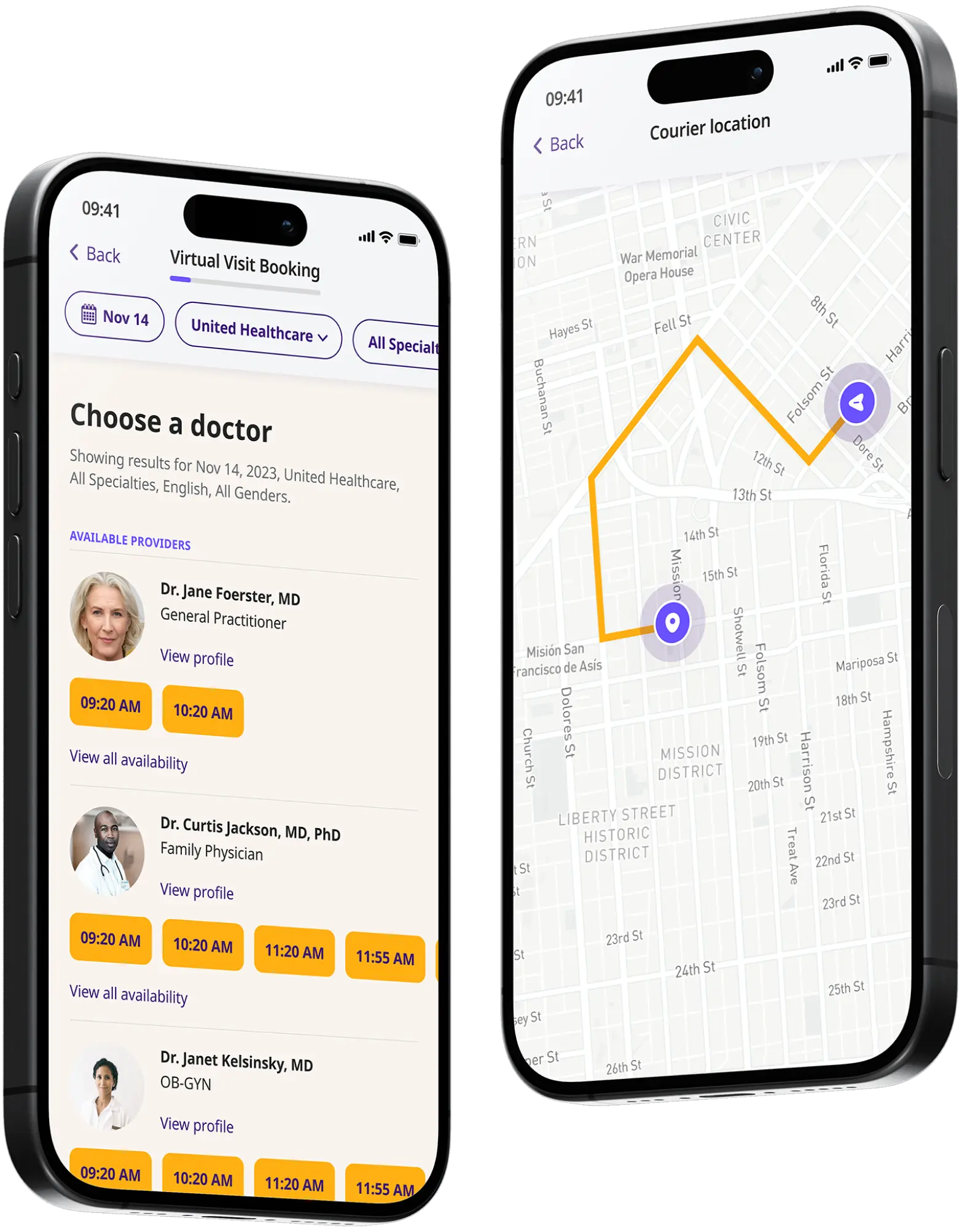
Choose a doctor
Choose a physician by availability, specialty, ratings, and more.

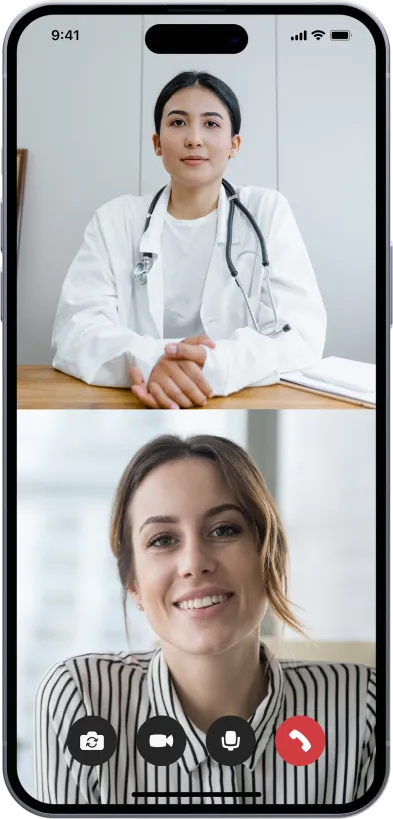
Start your video visit
Connect with a doctor in minutes on a secure video call.
Get your prescription
Pick up your meds or have them delivered in as little as an hour.

Available in 50 states. Insurance accepted.

One-Time
Physician Visit
One-time visit with a physician for diagnosis, treatment, Rx, labs, referrals, and doctor’s notes.


Accepted Insurances
See why people turn to DrHouse...

Best online doctor
Amazing
Will use again
Quick, convenient...
Great.
I loved it
Very easy
Wonderful app...
Very satisfied
Surprisingly Fast
Great doctor!
1st time
Five stars
Highly Recommend
AMAZING!!
First time user
Definitely using...
Best Virtual Doctor
Very useful
Got my prescript...
Not bad at all
Reliable...
Best healthcare app


As seen in





About urgent care
What is urgent care?
Urgent care is medical care for an illness or injury that needs attention soon but isn’t life-threatening. MedlinePlus lists the kinds of problems urgent care handles. They include common illnesses like colds, flu, earaches, sore throats, migraines, low-grade fevers and limited rashes, and minor injuries like sprains, back pain, minor cuts and burns, minor broken bones and minor eye injuries.
Anything that could be life-threatening belongs in the ER, not urgent care.
What is virtual urgent care?
Virtual urgent care, also called online urgent care or an urgent care virtual visit, is the help you’d get at a walk-in clinic for a sudden, non-emergency illness, delivered by video instead. A doctor sees you on screen, works out what’s going on, and can prescribe medication when it’s appropriate. Minor injuries usually still need hands-on care at a clinic.
Video visit, urgent care clinic or ER?
A video visit is usually the place to start for burning or urgency when you pee, sinus pressure, ear pain, pink eye, fever, cough, a sore throat or flu symptoms. The same goes for a rash, hives or allergy symptoms, a stomach bug, a refill or a doctor’s note. For STI symptoms or blood work, a video visit can be the first step, followed by a lab.
Go to an in-person urgent care clinic for a sprain or a possible minor broken bone, which may need an X-ray and a hands-on exam. The same goes for a minor cut or burn that needs to be cleaned and closed. Dehydration you can’t fix with fluids at home calls for a clinic that offers IV fluids, or the ER, so call ahead.
Call 911 or go to the ER for chest pain or pressure, trouble breathing, sudden weakness or drooping on one side of the body, or sudden trouble speaking, seeing or walking. Heavy bleeding, a deep wound, a bone pushing through the skin, fainting, a seizure, sudden confusion and a severe allergic reaction all need emergency care too. These clinic and ER examples follow MedlinePlus.
Does urgent care do X-rays?
Many in-person urgent care clinics do. MedlinePlus lists sprains and minor broken bones among the injuries urgent care handles, and those usually call for an X-ray. Not every clinic has one, though, so call ahead or check the clinic’s website before you go. A video visit can’t take an X-ray, but a doctor can help you decide whether you need one.
Does urgent care do stitches?
Many in-person urgent care clinics can clean and close a minor cut, and MedlinePlus lists minor cuts and burns among the problems urgent care handles. Deep wounds and heavy bleeding belong in the ER. Stitches can’t be done by video, so if you think a cut needs them, go straight to an in-person clinic.
Can urgent care give IV fluids?
Some in-person urgent care clinics can give IV fluids for dehydration, but not all, so call ahead. MedlinePlus says vomiting or diarrhea that won’t stop needs the ER. So do signs of dehydration in a child, such as a dry mouth, no tears or no wet diapers in 18 hours. A video visit can help with a milder stomach bug and tell you when it’s time to be seen.
Does urgent care do blood work?
Some in-person urgent care clinics can draw blood or run basic lab tests, but what’s offered varies, so call ahead. A virtual urgent care doctor can’t draw blood, but can refer you to a lab and review the results with you afterward.
Can urgent care do ultrasounds?
Some urgent care clinics can, but it’s less common than X-rays, so call ahead before you go for one. A video visit can’t include an ultrasound, but a doctor can tell you whether you need imaging. Sudden, severe pain anywhere in your body, including your belly or pelvis, is a reason to go to the ER, according to MedlinePlus.
Does urgent care do STD testing?
Many urgent care clinics offer STD testing, and a virtual visit can be a starting point too. A doctor reviews your symptoms and history by video, treats you when it’s medically appropriate, and refers you to a lab for testing.
Can urgent care prescribe antibiotics?
Yes, when a doctor finds a bacterial infection that needs them, such as a UTI. CDC is clear that antibiotics don’t work on viruses, which cause colds, flu and most sore throats. Taking them when you don’t need them can cause side effects such as rash, nausea and diarrhea, and some bacterial infections get better without them, so a doctor prescribes antibiotics only when they’ll help.
Can you go to urgent care for a UTI?
Yes, and you may not need to go anywhere. A doctor can assess symptoms like burning, urgency and frequent urination by video and prescribe an antibiotic when it’s medically appropriate. CDC lists UTIs among the infections antibiotics treat. If your symptoms call for a test or an exam in person, the doctor will tell you.
Urgent care for the flu
For flu, timing matters. CDC says flu antivirals work best when started early, ideally within two days after symptoms begin, and they need a prescription. A doctor can assess flu symptoms by video and prescribe an antiviral such as Tamiflu or Xofluza when it’s appropriate. For colds and other viruses, the doctor can recommend symptom relief and tell you which warning signs mean you should be seen in person.
When should you go to the ER instead of urgent care?
Call 911 or go to the ER for anything that could be life-threatening. MedlinePlus lists trouble breathing, chest pain or pressure, pain in the arm or jaw, fainting, a seizure and sudden confusion among the signs in adults. Suddenly not being able to speak, see, walk or move, and weakness or drooping on one side of the body, are emergencies too.
The same goes for heavy bleeding, a deep wound or a serious burn, and a possible broken bone with loss of movement, especially if the bone is pushing through the skin. Coughing or throwing up blood, severe pain anywhere on the body, and a high fever with a headache and stiff neck also need the ER. So do a high fever that medicine doesn’t bring down, vomiting or diarrhea that won’t stop, a severe allergic reaction, and a possible poisoning or overdose.
When to take your child to urgent care or the ER
MedlinePlus says urgent care can treat a child’s cold, flu, earache, sore throat, minor headache, low-grade fever or limited rash. Go to the ER or call 911 if your child has trouble breathing or is turning blue, passes out, or is suddenly hard to wake, too sleepy or confused.
A seizure, a high fever with a headache and stiff neck, or a high fever that medicine doesn’t bring down also needs the ER. So do vomiting or diarrhea that won’t stop, signs of dehydration such as a dry mouth, no tears or no wet diapers in 18 hours, and a severe allergic reaction, heavy bleeding, a deep wound or a serious burn.
When to call 988
If you or someone you know is thinking about suicide or is in a mental health or substance use crisis, call or text 988, or chat at 988lifeline.org. The 988 Suicide & Crisis Lifeline is available 24/7. If someone is in immediate danger, call 911.
How much does urgent care cost?
It depends on the clinic, the region and what you need, since X-rays, tests and procedures add to the total. For a benchmark, UnitedHealth Group’s analysis of 2018 claims for privately insured people put the average cost of treating common conditions at $193 at an urgent care center. The same conditions averaged $167 at a doctor’s office and $2,032 in a hospital emergency department.
The ER also costs patients the most out of pocket. Peterson-KFF found that people in large employer plans paid an average of $646 out of pocket per emergency department visit in 2019.
Urgent care & DrHouse
Is there online urgent care near me?
Yes, wherever you are in the U.S. DrHouse isn’t a clinic with an address: it’s a video visit in our app that works in all 50 states, from home, work or a hotel room, as long as you’re physically in the U.S. during the visit. Afterward, prescriptions are sent to the pharmacy near you that you pick, or in select areas you can have them delivered the same day.*
Is DrHouse urgent care open now?
Yes, around the clock. DrHouse doctors are available 24 hours a day, 365 days a year, including nights, weekends and holidays, so there are no urgent care hours to look up and no closing time.
Do you need an appointment, or can you walk in?
You don’t need an appointment. DrHouse works like a walk-in clinic: open the app and take the next available doctor by video, often within minutes, with no waiting room. If you’d rather plan ahead, you can book a later time or choose a doctor by ratings, specialty or language.
How a DrHouse urgent care visit works
Open the DrHouse app, or download it from the App Store or Google Play; if you start on our website, we’ll text you a download link. Tell us what’s wrong, add your insurance or choose self-pay, and take the next available doctor or pick one by ratings, specialty or language.
You talk it through on a secure video call, and your doctor may ask to see the problem on camera, like a rash or a red eye. You leave with a plan. If you’re prescribed medication, you choose pickup at a pharmacy near you or same-day delivery in select areas.*
What you need before your visit
You’ll need the DrHouse app on an iPhone (iOS 16 or later) or an Android phone (Android 13 or later), because visits don’t run in a web browser or on tablets. Check that your camera and microphone work, your phone is charged and your connection is steady.
Have your insurance card if you’re using insurance, a list of your medications and allergies, and the pharmacy you want to use. Keep a photo ID nearby in case we need to confirm who you are, find a quiet, private spot, and remember you need to be physically in the U.S. For anyone under 18, a parent or legal guardian needs to be on the visit.
Who you’ll see
Every DrHouse visit is with a physician, an MD or DO licensed in the U.S. Our doctors average 20 years of experience, and care is overseen by our medical director, Dr. Mike Hoaglin, MD. You can see each doctor’s specialty, ratings and languages before you choose.
What DrHouse urgent care treats
DrHouse urgent care handles many of the illnesses that send people to a walk-in clinic, and your doctor will tell you if something needs to be seen in person. Common reasons include UTIs, sinus, ear and eye infections including pink eye, and minor skin infections, where your doctor can prescribe antibiotics when medically appropriate.
Colds, coughs, sore throats, congestion, body aches and flu are common too. For flu, your doctor can prescribe an antiviral such as Tamiflu or Xofluza when appropriate. DrHouse doctors also treat seasonal allergies, rashes, hives, mild allergic reactions, eczema flare-ups, stomach bugs, acid reflux, headaches and migraines, and urinary, vaginal and STI symptoms.
What a DrHouse video visit can’t do
A video visit can’t take an X-ray, an ultrasound or another scan, close a cut, set a broken bone, give IV fluids or shots, or run a test such as a strep or flu swab. DrHouse doctors don’t prescribe controlled substances, or certain other medications by telemedicine, such as gabapentin, medical marijuana, some muscle relaxants and hormone replacement therapy (HRT). DrHouse isn’t for emergencies. When you need any of these, your doctor will tell you where to go.
Prescriptions sent to a pharmacy near you
You pick the pharmacy, and prescriptions usually reach it within 15 to 45 minutes after your visit. Almost any retail or mail-order pharmacy works, and if yours is out of stock, pharmacies can generally transfer a prescription to another location.
In select areas, you can skip the trip and have your medication delivered the same day, sometimes in as little as an hour, and the courier checks your photo ID at the door.*
Lab tests and STD testing
If you need blood work or an STD (STI) test, your DrHouse doctor can refer you to one of Labcorp’s locations nationwide. The results go straight to your doctor, so you can follow up in the app.
A doctor’s note if you need one
If you’re too sick for work or school, your doctor can write a signed doctor’s note when medically appropriate. It’s usually emailed within about an hour and comes with your visit. Whether it’s accepted is up to your employer or school.
Urgent care for kids at DrHouse
Children can be seen, as long as a parent or legal guardian is present during the video visit for anyone under 18. Add each child to your account so they have their own medical record, and start a separate visit for each one. The warning signs that mean a child needs the ER are in About urgent care.
Insurance and what a visit costs
DrHouse accepts many major plans, including Blue Cross Blue Shield, UnitedHealthcare, Aetna, Medicare, Humana and Elevance Health (formerly Anthem) plans. With insurance, a DrHouse video visit is a typical $0 to $30 copay, depending on your plan’s copay, deductible and coinsurance.
You don’t need insurance: a self-pay visit is $129, and it includes a doctor’s note or lab referral if you need one. You can pay by card, Apple Pay or Google Pay, and HSA or FSA cards work where your plan allows.
Is a DrHouse visit cheaper than urgent care?
For common illnesses, a video visit is often the cheaper option. A DrHouse visit is a typical $0 to $30 copay or $129 self-pay, compared with UnitedHealth Group’s average of $193 for treating common conditions at urgent care (2018 data). You also skip the drive and the waiting room. If you need an X-ray, stitches or a test on the spot, though, an in-person clinic is the right place.
More ways to see a DrHouse doctor
Prefer to plan ahead? Book an online doctor visit for later, with the doctor you choose. Fever, aches and chills? See our cold and flu treatment page.
FAQs
Is online urgent care open now?
Yes. DrHouse is open 24 hours a day, 365 days a year, including nights, weekends and holidays, so there are no urgent care hours to check. Open the app and start a video visit with a licensed U.S. doctor right now, or book a time later if that suits you better. If you have chest pain, trouble breathing or another emergency, call 911 instead.
How long is the wait for online urgent care?
There’s no waiting room. You take the next available DrHouse doctor by video, often within minutes, at any hour of the day or night. You wait at home instead of in a lobby full of sick people. If you’d rather not wait at all, you can book a set time with the doctor you choose.
Do you accept walk-ins?
In the way that matters, yes. You don’t need an appointment: open the app and take the next available doctor, any hour of the day. It’s a walk-in visit by video instead of at a front desk. If you’d rather plan ahead, you can book a specific time or choose a doctor by ratings, specialty or language.
Can online urgent care prescribe antibiotics?
Yes, when your doctor finds a bacterial infection that needs them, such as a UTI. CDC notes that antibiotics don’t work on viruses, which cause colds, flu and most sore throats, so your doctor won’t prescribe them for those. Every prescription is at the doctor’s discretion, and you choose pickup at a pharmacy near you or same-day delivery in select areas.*
Can I pick up my prescription at a pharmacy near me?
Yes. You choose the pharmacy during your visit, and prescriptions usually reach it within 15 to 45 minutes after your visit. Almost any retail or mail-order pharmacy works, and if it’s out of stock, pharmacies can generally transfer the prescription to another location. In select areas, you can choose same-day delivery instead, sometimes in as little as an hour.*
How much does urgent care cost without insurance?
A DrHouse video visit is $129 without insurance, and that includes a doctor’s note or lab referral if you need one. In-person prices vary by clinic: UnitedHealth Group put the average cost of treating common conditions at urgent care at $193, based on 2018 claims. With insurance, a DrHouse visit is a typical $0 to $30 copay.
Is it cheaper to go to urgent care or use telehealth?
For common illnesses, telehealth often costs less. A DrHouse visit is a typical $0 to $30 copay or $129 self-pay, compared with UnitedHealth Group’s averages of $193 at urgent care and $2,032 in the ER for treating common conditions (2018 data). You also skip the drive and the waiting room. If you need an X-ray or stitches, though, an in-person clinic is the right choice.
Does online urgent care take insurance?
DrHouse does. We accept many major plans, including Blue Cross Blue Shield, UnitedHealthcare, Aetna, Medicare, Humana and Elevance Health (formerly Anthem) plans, and the typical copay is $0 to $30. Your cost depends on your plan’s copay, deductible and coinsurance. No insurance? A visit is $129, and HSA or FSA cards work where your plan allows.
Can I go to urgent care for a UTI?
Yes, and with DrHouse you can do it by video. A doctor can assess symptoms like burning, urgency and frequent urination, and prescribe an antibiotic when it’s medically appropriate; CDC lists UTIs among the infections antibiotics treat. You then pick it up at a pharmacy near you or choose same-day delivery in select areas.* Your doctor will tell you if you need an in-person test.
Can online urgent care treat the flu?
Yes. A DrHouse doctor can assess flu symptoms by video and, when it’s medically appropriate, prescribe an antiviral such as Tamiflu or Xofluza. CDC says flu antivirals work best when started early, ideally within two days after symptoms begin, and our doctors are available 24/7, so a fever at midnight doesn’t have to wait until morning. Trouble breathing or chest pain means 911.
Can online urgent care do X-rays or stitches?
No. A video visit can’t take an X-ray, close a cut or set a bone. Many in-person urgent care clinics can, since MedlinePlus lists sprains, minor cuts and burns and minor broken bones among the injuries urgent care handles, but call ahead to check. For a deep wound, heavy bleeding or a bone pushing through the skin, go to the ER.
Can my child be seen by online urgent care?
Yes. A parent or legal guardian has to be present during the video visit for anyone under 18. Add each child to your account so they have their own medical record, and start a separate visit for each one. Go to the ER instead if your child has trouble breathing, is hard to wake, has a seizure or shows signs of dehydration.
Can I get a doctor’s note from online urgent care?
Yes, when it’s medically appropriate. Ask for one when you start your visit, and if your doctor agrees, they’ll sign it, and it’s usually emailed to you within about an hour as part of your visit. Whether it’s accepted is up to your employer or school. DrHouse doctors don’t complete disability, FMLA or insurance forms.
When should I go to the ER instead of urgent care?
Call 911 or go to the ER for anything that could be life-threatening, such as chest pain or pressure, trouble breathing, sudden weakness on one side of the body, heavy bleeding, fainting, a seizure, a severe allergic reaction or a serious head injury. For thoughts of suicide or a mental health crisis, call or text 988. Video visits are for urgent problems that aren’t emergencies.
Resources & Sources
- National Library of Medicine, MedlinePlus. “When to use the emergency room – adult.” https://medlineplus.gov/ency/patientinstructions/000593.htm.
- National Library of Medicine, MedlinePlus. “When to use the emergency room – child.” https://medlineplus.gov/ency/patientinstructions/000594.htm.
- Centers for Disease Control and Prevention, Antibiotic Prescribing and Use. “Healthy Habits: Antibiotic Do’s and Don’ts.” https://www.cdc.gov/antibiotic-use/about/index.html.
- Centers for Disease Control and Prevention, Influenza (Flu). “Treatment of Flu.” https://www.cdc.gov/flu/treatment/index.html.
- UnitedHealth Group. “18 Million Avoidable Hospital Emergency Department Visits Add $32 Billion in Costs to the Health Care System Each Year.” https://www.unitedhealthgroup.com/content/dam/UHG/PDF/2019/UHG-Avoidable-ED-Visits.pdf.
- Peterson-KFF Health System Tracker. “Emergency department visits exceed affordability threshold for many consumers with private insurance.” https://www.healthsystemtracker.org/brief/emergency-department-visits-exceed-affordability-thresholds-for-many-consumers-with-private-insurance/.
- Substance Abuse and Mental Health Services Administration. “988 Suicide & Crisis Lifeline fact sheet.” https://www.samhsa.gov/sites/default/files/988-factsheet.pdf.
Related services
Explore more of our services tailored to your needs and discover additional ways we can support your healthcare needs.
Weight Loss Treatment
Chronic Condition Management
Annual Wellness Visits
Online Lab Test Referrals
Online Prescription Refills
Smoking Cessation Treatment
Online Doctor's Note
Telehealth Services
Online Prescriptions
Online Dermatology
Virtual Urgent Care
Virtual Primary Care
Online Doctor
Women's Health
Men’s Health

Frequently asked questions


Healthcare
on your schedule
Skip the unnecessary waiting room, see a board-certified physician now.
Available in 50 states. Insurance accepted.